
When someone in Adajan searches for “dentist near me” or a factory owner in Sachin looks up “CA in Surat”, Google shows a short map list and a handful of websites. The businesses in that list get the calls. Local SEO strategies are the set of habits that decide whether your business is one of them — and most of them cost time and attention rather than money.
The trouble is that local SEO advice is usually a long checklist with no sense of priority. This guide puts the work in a sensible order: the things that matter most, how to keep them up, and how to tell whether any of it is producing calls and customers.
How local search results are decided
Google describes three broad factors for local results: relevance (does your business match what was searched), distance (how far you are from the searcher or the place named) and prominence (how well known and well reviewed you are, online and off). You cannot change your distance from a searcher. Every local SEO strategy below is about the other two: making it obvious what you do and where, and building real evidence that people use and value you.
Set up and maintain your Google Business Profile
Your Google Business Profile is what appears in the map results, so it is the first thing to get right. If you have never created or verified one, our short answer on how to show up on Google covers the setup steps. Once it exists, the strategy is in the detail:
- Primary category: choose the most specific one that fits (“Dental clinic”, not just “Doctor”), and add secondary categories only where they are genuinely true.
- Services and products: list them in the words customers use, with short descriptions.
- Hours: keep them accurate, including Diwali, Uttarayan and other holiday closures. Arriving at a closed shutter is the fastest way to earn a bad review.
- Description: say plainly what you do, for whom and in which areas, without stuffing keywords.
Keep your name, address and phone consistent everywhere
NAP consistency means your business name, address and phone number read the same on your website, your Google profile, Justdial, IndiaMART, Facebook, Instagram and any industry directory. Small mismatches — an old phone number on one listing, “Ring Road” on one and “Ring Rd.” plus a different landmark on another — make it harder for search engines to be sure they are all the same business.
Write your official version once, in a document, and copy it exactly each time. When you move or change numbers, update every listing the same week.
Earn reviews ethically and reply to them
Reviews influence both how prominent you appear and whether a searcher chooses you over the next listing. The approach that works is simple: ask every satisfied customer at the moment they are happiest, and make it a one-tap job with a direct link or QR code. Our guide to getting more Google reviews has the practical steps.
Two rules matter. Never buy reviews, offer discounts for them or write them yourself; Google’s policies prohibit it and it can lead to removed reviews or restrictions on your profile. And reply to every review, good or bad. A calm, specific reply to a complaint often reassures future customers more than the complaint itself worries them.
Build location and service pages on your website
Your Google profile links to your website, and the website is where relevance is really proven. Give each main service its own page, written the way people search — “root canal treatment in Surat” rather than a single “Services” page with a bulleted list. If you serve several areas, create a location page only where you have something genuinely specific to say about that area: the branch address, directions, the team there, services offered locally.
A good example is the website we built for Ocean 32 Dentofacial Hub, a dental clinic in Surat. It has dedicated pages for specialised treatments such as microscopic dentistry, CAD-CAM CEREC crowns and dental implants, geo-targeted landing pages, structured data markup, and quick routes to book an appointment or send a WhatsApp enquiry — all on a fast, mobile-friendly build.
Use local keywords naturally
Local keywords combine a service with a place or a “near me” intent: “saree wholesaler in Ring Road Surat”, “CNC job work Sachin GIDC”. Use them where they belong — page titles, headings, the first paragraph, image alt text — and then write normally. Repeating a city name in every sentence reads badly to people and does not help with search engines.
Get the on-site basics right
- Your full address and a click-to-call phone number on every page, usually in the footer.
- An embedded map on the contact page.
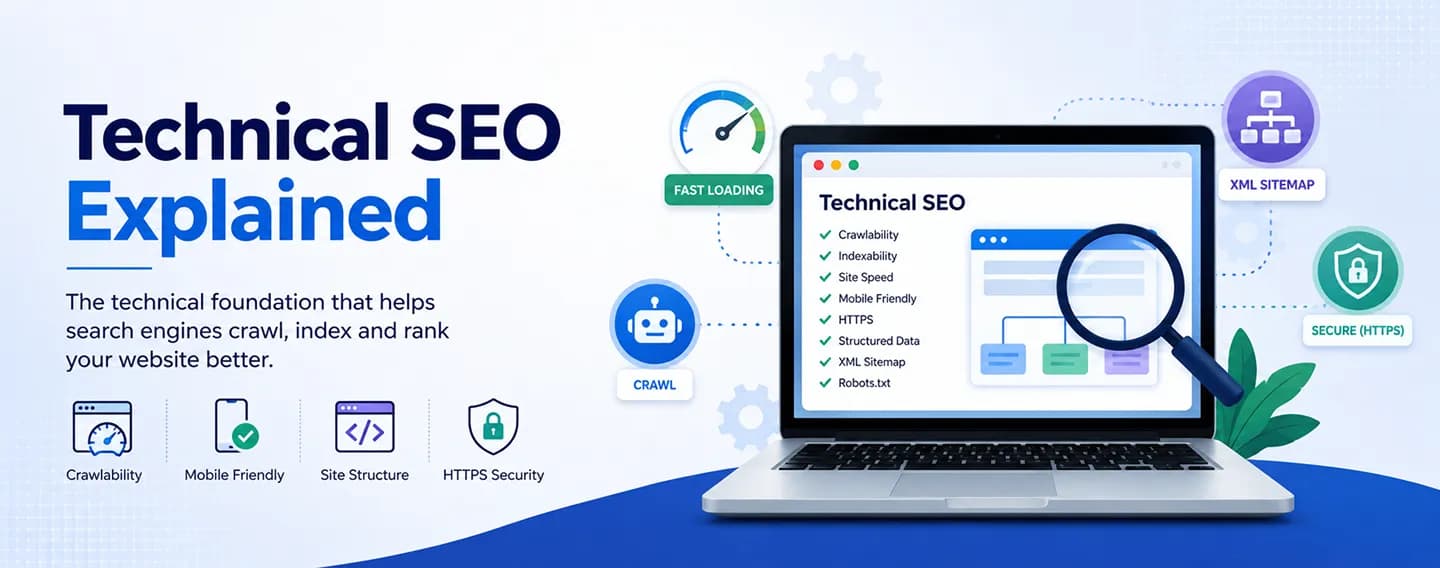
- LocalBusiness structured data so search engines can read your address, hours and phone reliably.
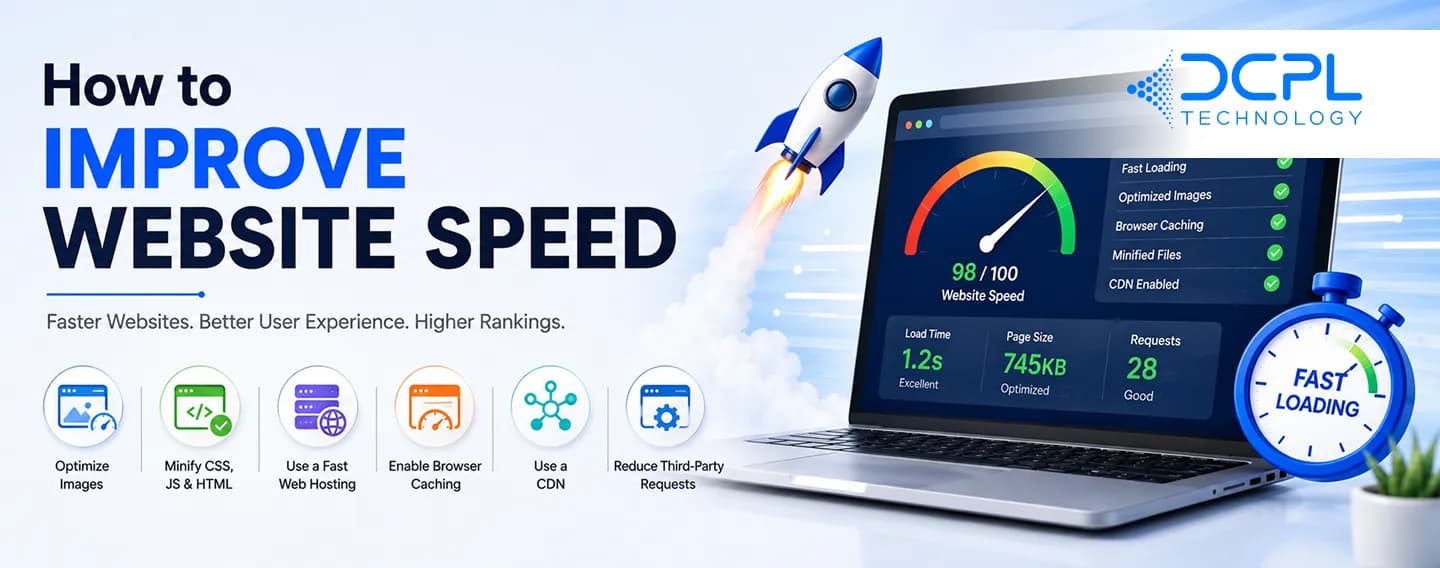
- Fast loading on mobile data, because most local searches happen on phones.
- A unique title and meta description for every page.
List your business in relevant directories
Citations are mentions of your business on other sites. Focus on quality over quantity: the major general directories in India, your trade association, your industry’s own directories and local chamber listings. A handful of accurate, complete listings is more useful than dozens of half-filled ones you will never update.
Keep your profile active with photos and posts
Add real photos regularly — the shopfront so people recognise it, the inside, your team, finished work. Use profile updates to announce new services, offers and events, and keep your services list current as you add or drop work. An active profile signals that the business is open and cared for.
Track calls, direction requests and enquiries
Rankings fluctuate, so measure what actually matters. Your Google Business Profile shows calls, direction requests, website clicks and the search terms people used to find you. On your website, track form submissions and WhatsApp clicks. Most usefully, ask every new customer how they found you and note it down. Over a few months, that tells you which of these local SEO strategies is paying off.
How long do local SEO strategies take to work?
There is no fixed timeline. Fixing your Google profile, categories and hours can change what searchers see fairly quickly, while reviews, citations and website pages build up gradually. Treat local SEO as a routine — a little every week — rather than a one-time project.
For a wider view of attracting customers nearby, read our answer on getting more customers for a local business. If your website is the weak link — slow, without service pages, or hard to update — our web development team can rebuild it with local search in mind. Share your current site and we will point out what to fix first.