
For a small business with a limited marketing budget, the SEO vs Google Ads question feels like a choice you have to get right first time. Spend on ads and you may burn money on clicks that never call. Invest in SEO and you may wait a long while before anything happens. Meanwhile, competitors seem to be everywhere on Google.
The honest answer is that the two do different jobs, at different speeds, with different cost patterns. Once you understand those differences, the decision usually becomes obvious for your situation — and for many businesses the answer is a sequence rather than a choice.
How SEO works
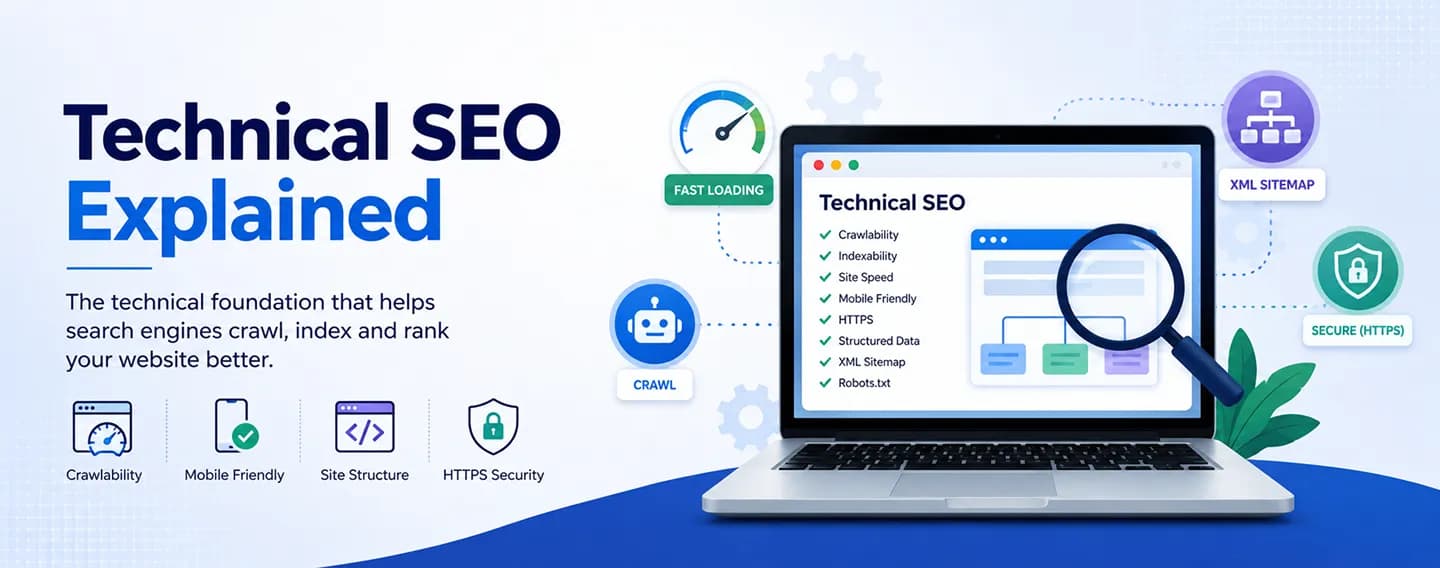
Search engine optimisation means improving your website and online presence so that Google shows you in the free, organic results for searches your customers make. It covers three broad areas: technical health (a fast, mobile-friendly site that Google can crawl), content (clear pages that answer what people are searching for) and reputation (reviews, mentions and links from other sites). For local businesses it also includes your Google Business Profile; our answer on how to show up on Google covers that first step.
You do not pay Google for organic traffic. You pay with effort — your own time or someone else’s — to build and maintain pages that deserve to rank.
How Google Ads works
Google Ads lets you pay to appear in the sponsored positions for chosen searches. You pick keywords, write ads, set a budget and choose who sees them by location, time and device. Placement is decided by an auction that considers both your bid and how relevant and useful Google judges your ad and landing page to be. In the most common setup you pay when someone clicks.
Ads can start showing almost as soon as a campaign is approved. They also stop the moment you stop paying.
Speed versus compounding
This is the core difference. Google Ads is fast and linear: spend more, get more clicks, stop spending, get none. SEO is slow and compounding: early effort produces little visible result, but a well-ranked page can keep bringing visitors for a long time without a per-click cost, and each good page strengthens the site as a whole.
Think of ads as renting a stall in the busiest market, and SEO as building your own shop on a street that gets busier over time. Renting gets you selling today. Owning is cheaper in the long run, but takes longer to set up.
The cost model, in plain words
With Google Ads, the cost is direct and measurable: you pay for each click, and the price depends on how many other businesses want the same searches. Searches that many businesses compete for cost more per click than niche searches that few advertisers want. Your spend is controllable to the rupee, but it never builds up into an asset.
With SEO, the cost is mostly people and time: writing service pages, improving speed, earning reviews, fixing technical issues. It is harder to tie a specific rupee to a specific lead, but the work keeps paying after you stop doing it, as long as the site stays healthy.
Which suits which situation
Here is the decision in plain terms:
- Brand new business or new product launch: start with Google Ads to get early enquiries and learn which searches convert, while building SEO foundations in parallel.
- Seasonal offers — a Diwali sale, wedding-season collection or admission season: ads, because the window is short and SEO cannot be switched on for a few weeks.
- Local services such as clinics, salons, repair services and coaching classes: SEO and a strong Google Business Profile first, because the map results bring steady local enquiries; add ads for your most valuable services if needed.
- Long sales cycles — B2B manufacturers, exporters, software buyers who research for weeks: SEO, because buyers read several pages before getting in touch, and helpful content keeps you in front of them at every visit.
- Very small budget: SEO and your Google profile, since a tiny ad budget in a competitive field often runs out before it produces a useful number of leads.
- Need to test demand quickly: ads, because you see which searches bring enquiries much sooner than organic results could show you.
Using SEO and Google Ads together
The two strengthen each other when run together. Ads data shows which search terms actually produce calls and orders, which tells you which pages to build for SEO. As those pages start ranking, you can reduce ad spend on terms where you already appear organically and shift it to newer or more competitive ones. Showing in both the sponsored and organic results for an important search can also strengthen your presence for that customer.
Both depend on the same thing: the page a visitor lands on. A slow page wastes ad clicks and hurts rankings at once. If yours takes too long to load on mobile, our answer on why a website is slow is worth reading before you spend on either.
What to measure
Clicks and rankings are not the goal. Track:
- Leads: form submissions, WhatsApp chats and calls from the website.
- Cost per lead: ad spend divided by leads for ads; for SEO, the time and fees spent over a period divided by organic leads.
- Lead quality: how many leads became paying customers, recorded by asking every new customer how they found you.
- Calls and direction requests from your Google Business Profile.
Common mistakes
- Sending ad traffic to the home page instead of a page about the exact service searched.
- Using broad keywords without negative keywords, so the budget is spent on irrelevant searches.
- Expecting SEO results within weeks and giving up before the work has had time to build.
- Measuring success by traffic or rankings rather than by enquiries and sales.
- Not tracking phone calls, which for many Indian small businesses are the main way leads arrive.
Is SEO or Google Ads better for a small business?
If you need enquiries this month or are testing a new offer, Google Ads is the faster tool. If you want a steady, lower-cost flow of customers over the long run, SEO is the stronger investment. Most small businesses do well starting ads for quick learning while building SEO, then shifting budget towards SEO as organic results grow.
For a wider look at bringing in local customers, see our answer on getting more customers for a local business. Whichever route you choose, the website does the converting; our web development team builds fast, well-structured sites with clear service pages that both channels depend on. Share your current site and goals, and we will tell you what to fix before you spend on traffic.