If you're a small business owner looking to grow online, you've probably heard about SEO and Google Ads. Both can help you attract customers, increase website traffic, and generate leads. However, they work in very different ways.
A common question businesses ask is: Should I invest in SEO or Google Ads?
The answer depends on your goals, budget, and how quickly you need results. In this guide, we'll compare SEO and Google Ads to help you make the right decision.
What Is SEO?
SEO (Search Engine Optimization) is the process of improving your website so it ranks higher in Google's organic search results.
SEO involves:
- On-page SEO optimization
- Technical SEO improvements
- Content creation
- Keyword optimization
- Link building
- Local SEO strategies
The goal is to attract free, long-term traffic from search engines.
What Are Google Ads?
Google Ads is Google's paid advertising platform.
With Google Ads, businesses can:
- Appear at the top of search results instantly
- Target specific keywords
- Control advertising budgets
- Generate traffic quickly
Unlike SEO, you pay every time someone clicks on your advertisement.
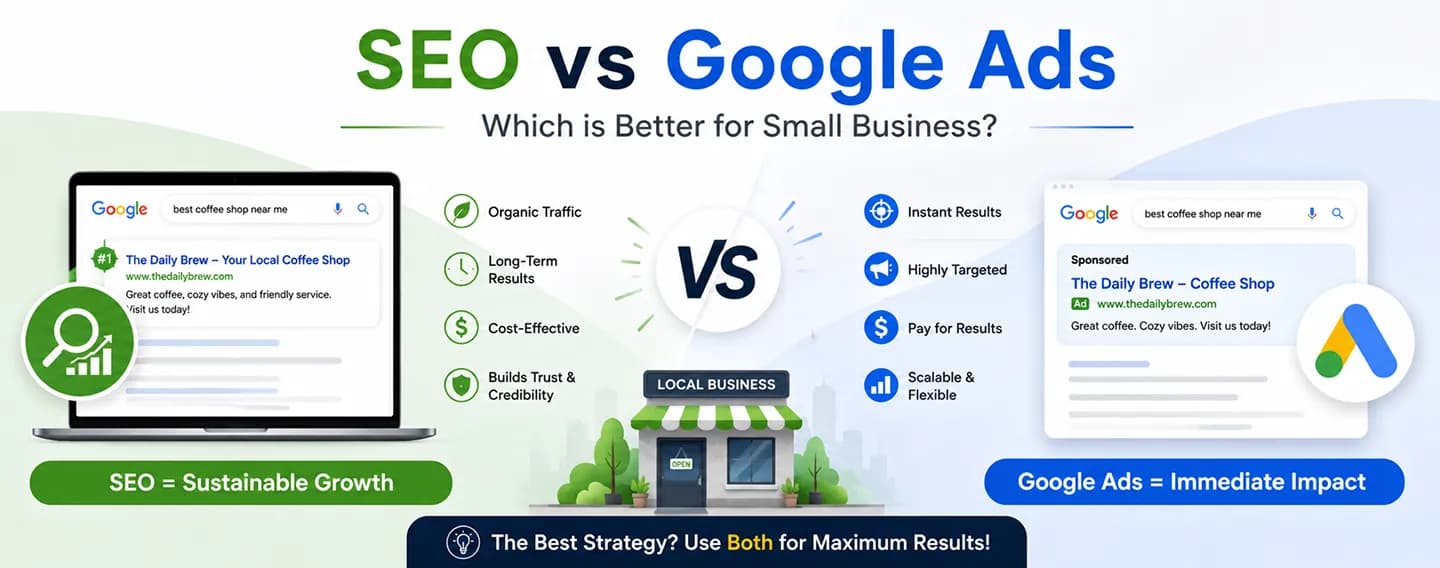
SEO vs Google Ads: Key Differences
1. Cost
SEO
- No cost per click
- Requires ongoing optimization
- Long-term investment
Google Ads
- Pay for every click
- Costs vary by industry and competition
- Traffic stops when you stop paying
Winner: SEO for long-term cost efficiency.
2. Speed of Results
SEO
SEO takes time. Most websites see noticeable results within 3 to 6 months.
Google Ads
Google Ads can generate traffic immediately after launching a campaign.
Winner: Google Ads for immediate visibility.
3. Long-Term Value
SEO
Once your website ranks well, it can continue generating traffic for months or years.
Google Ads
Traffic stops as soon as your advertising budget runs out.
Winner: SEO for long-term growth.
4. Trust and Credibility
Many users trust organic search results more than paid advertisements.
SEO helps build:
- Brand authority
- Credibility
- Customer trust
Google Ads provides visibility but may not create the same level of trust.
Winner: SEO.
5. Lead Quality
SEO often attracts users actively searching for information, products, or services.
Google Ads can also generate quality leads, but success depends heavily on:
- Keyword selection
- Ad quality
- Landing page optimization
Winner: Depends on campaign quality, but SEO often produces higher-quality long-term leads.
When Should Small Businesses Choose SEO?
SEO is ideal if:
- You want long-term growth
- You have a limited marketing budget
- You want organic website traffic
- You want to improve brand authority
- You want sustainable lead generation
SEO is especially valuable for local businesses and service providers.
When Should Small Businesses Choose Google Ads?
Google Ads is a good choice if:
- You need immediate leads
- You are launching a new product or service
- You have a flexible advertising budget
- You want quick visibility in competitive markets
Google Ads can be effective for short-term campaigns and promotions.
The Best Strategy: Use Both Together
Many successful businesses combine SEO and Google Ads.
For example:
Short-Term
Use Google Ads to generate immediate traffic and leads.
Long-Term
Invest in SEO to build organic traffic and reduce advertising dependence.
This balanced strategy provides both immediate and sustainable growth.
Common Mistakes to Avoid
Many small businesses make these mistakes:
- Expecting SEO results overnight
- Running Google Ads without proper targeting
- Ignoring landing page optimization
- Not tracking conversions
- Focusing only on traffic instead of leads
Success comes from strategy, not just spending money.
Final Thoughts
There is no universal winner between SEO and Google Ads. The best choice depends on your business goals.
If you want quick results, Google Ads can deliver traffic immediately.
If you want long-term growth and sustainable lead generation, SEO is the better investment.
For most small businesses, combining both strategies provides the strongest results. Use Google Ads for immediate visibility while building your SEO foundation for long-term success.