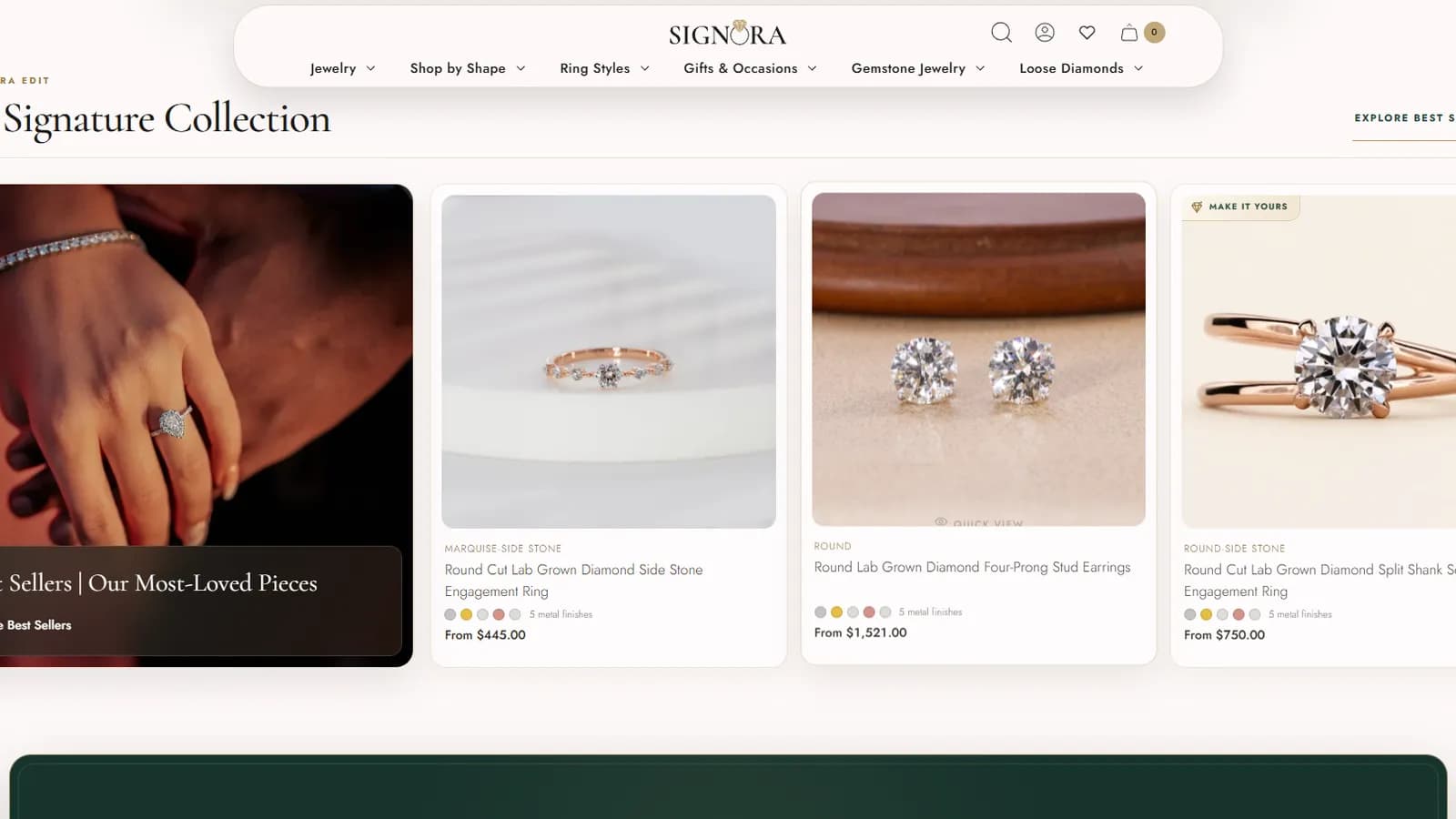
When Signora Jewels first came to us, its online store ran on a standard Shopify theme. It worked, in the way most new stores work: products had a page, the cart took payments, orders came in. But Signora is a three-generation jewellery atelier in Surat selling made-to-order, lab-grown diamond pieces to customers abroad, and a template built for T-shirts and candles could not tell that story or handle how fine jewellery is actually chosen and priced.
This is how we turned it into a custom Shopify jewellery store, one problem at a time — and what any jeweller planning the same journey can take from it.
Where Signora started: a standard theme with jewellery-sized gaps
Standard Shopify themes are good at one thing: getting a store live quickly. For a jeweller, they fall short in a few predictable places. Metal and stone options appear as plain dropdowns. The review widget looks like every other store’s. The blog is a column of text. And every price is a number someone types into a variant, so every change in metal rates means hours of editing and a real risk of a wrong price going live.
None of these is a bug. They are simply not what a general-purpose theme was designed for. Signora needed a store designed around how its customers choose a ring, not around the template.
Step 1: a theme built around the jewellery, not the template
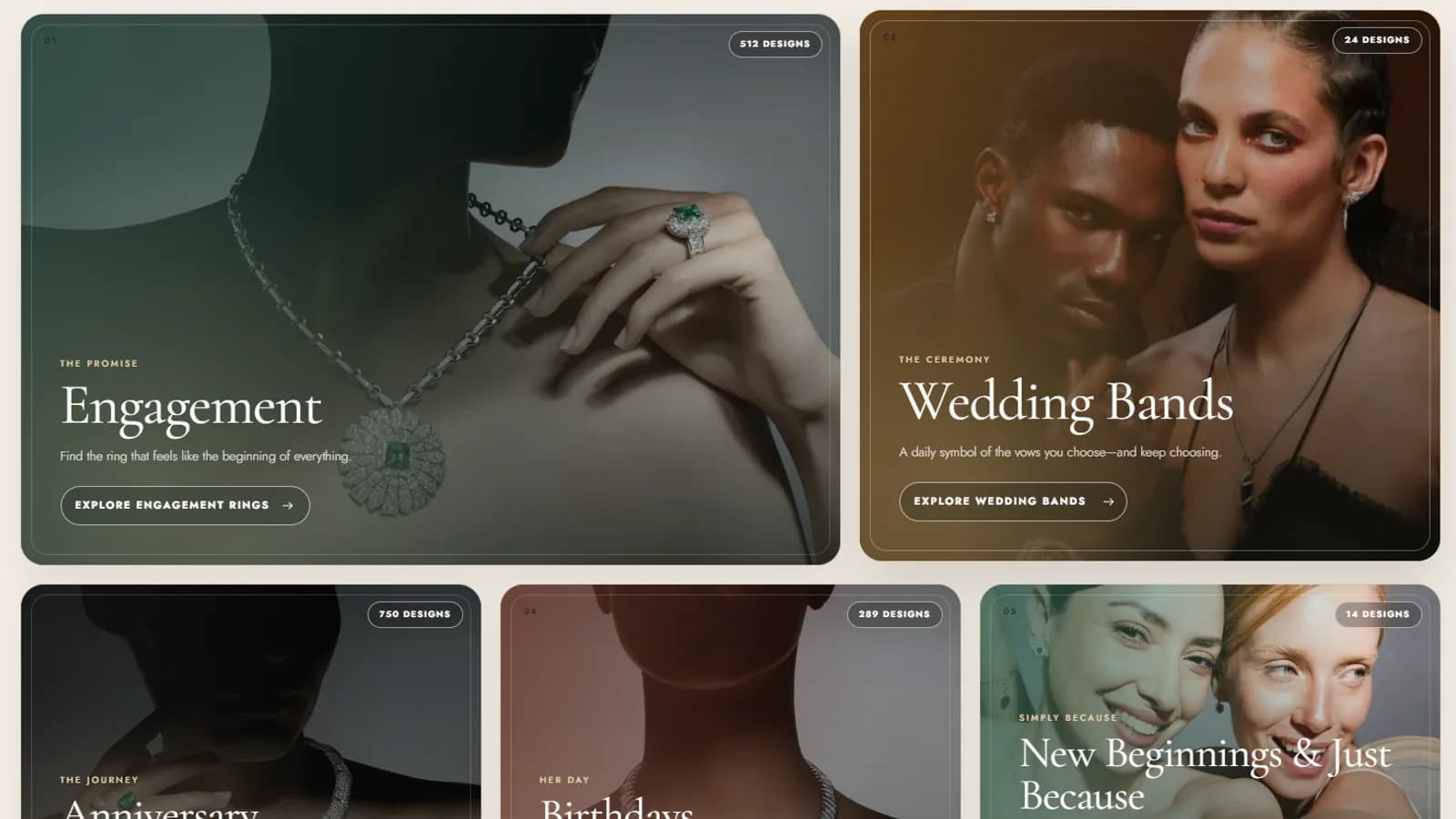
We started by customising the whole theme rather than patching individual pages. That meant re-planning the information architecture and the catalogue structure so customers can browse the way they shop for jewellery — by occasion, by piece and by shape — and giving the store a visual language that matches an atelier rather than a marketplace.
Around that, we built the journeys a made-to-order jeweller depends on: custom-design and consultation paths (appointments, WhatsApp and contact) so a customer can move from inspiration to confirmed specifications, and trust content that explains insured worldwide delivery, prepaid duties and taxes, documentation and secure checkout. International customers shop in their own currency — USD, GBP, EUR, CAD, AUD or INR.
Step 2: metal selection on the product page
On most jewellery stores, choosing a metal means picking from a dropdown and hoping the photo updates. On Signora’s product pages, the customer configures the piece: metal (14k or 18k solid gold, or platinum), diamond carat size, stone shape and ring size, with the page responding to each choice.
This level of choice is not something a standard theme provides, and comparatively few stores offer it well. It matters for made-to-order jewellery because the configuration is the order: a clear, visual selector reduces back-and-forth with customers and mistakes in what goes to the workshop.
Step 3: reviews that look like the brand
Signora uses Judge.me for product reviews. Its standard panel does the job, but it looks the same on every store that installs it — and on a premium jewellery page, a generic widget is the first thing that breaks the feeling of the brand.
We customised the reviews panel completely so it sits inside Signora’s design rather than on top of it: the same typography, spacing and colours as the rest of the page. The reviews are the same; they now read as part of the store, which is what makes them persuasive.
Step 4: a blog that teaches, not just posts
Shopify’s built-in blog gives you a title, an image and a column of text. For jewellery, that is not enough: buyers want to compare metals, understand carat and shape, and see the difference before they spend.
We rebuilt Signora’s blog layout so articles can carry tables, comparison blocks and well-placed images — the kind of content that genuinely helps a customer decide, and that search engines can understand. Our own guide to setting up a Shopify store for jewellery covers the same principles for any jeweller.
Step 5: the price engine — the change with the biggest impact
The single biggest improvement was pricing. On the standard setup, every variant’s price was typed by hand. With several metals, sizes and stones per design, that is a large number of prices to keep correct.
We built a price engine into the store using Shopify metafields. The details that decide a piece’s price are stored on the product, and the system calculates and shows the price automatically. Nobody types a price again, every variant follows the same rules, and an update no longer means editing products one by one.
For jewellers who want metal-rate pricing on Shopify without a custom build, MetalIQ — the Shopify app we build and run — updates every variant from one daily metal rate.
Where Signora is today
Step by step, a standard theme became a custom Shopify jewellery store: a design that belongs to the brand, product pages that let customers configure their piece, reviews and articles that build trust, and prices the system calculates itself. The SEO foundations and technical structure were part of the work throughout, and today Signora ranks well and is known as a well-made jewellery website.
See the live store for yourself at signorajewels.com, and the project details on our Signora Jewels work page.
What we do for jewellery brands on Shopify
Signora’s store is one example of what DCPL Technology does every day from Surat:
- Custom Shopify themes designed around your products and how your customers buy.
- Product configurators for metal, stone, size and made-to-order options.
- Pricing engines and apps, from metafield-based calculation to our own apps, MetalIQ and FacetFlow.
- Third-party app customisation, so tools like review widgets match your brand.
- Content and SEO structure, including richer blog layouts.
See all of it on our Shopify development page, or read more about our work for jewellery and gem businesses.
Can a standard Shopify theme handle metal and stone options?
Partly. A standard theme can list metal, size and stone as variants, but it shows them as simple dropdowns, has variant limits, and needs every price typed by hand. Visual configurators, made-to-order journeys and automatic pricing need theme customisation, metafields or an app built for jewellery.
If your store is still on a standard theme and you can see the same gaps, tell us what you sell and how you price it. We will tell you which of these steps would make the biggest difference first.