Web development continues to evolve rapidly as businesses demand faster, smarter, and more engaging digital experiences. Technologies that were considered advanced a few years ago are now becoming standard, while new innovations are changing how websites and web applications are built.
Whether you're a business owner, startup founder, or developer, staying updated with the latest web development trends can help you make better technology decisions and remain competitive.
Let's explore the top web development trends in 2026.
1. Progressive Web Apps (PWAs)
Progressive Web Apps continue to gain popularity because they combine the benefits of websites and mobile applications.
Key advantages:
- Fast loading speed
- Offline functionality
- App-like experience
- Lower development cost
- Improved user engagement
Many businesses are choosing PWAs as a cost-effective alternative to native mobile apps.
2. AI-Powered Web Experiences
Artificial Intelligence is becoming an essential part of modern web development.
Common AI applications include:
- Chatbots
- Personalized recommendations
- Automated customer support
- Smart search functionality
- Content generation assistance
AI helps improve user experience and business efficiency.
3. Mobile-First Development
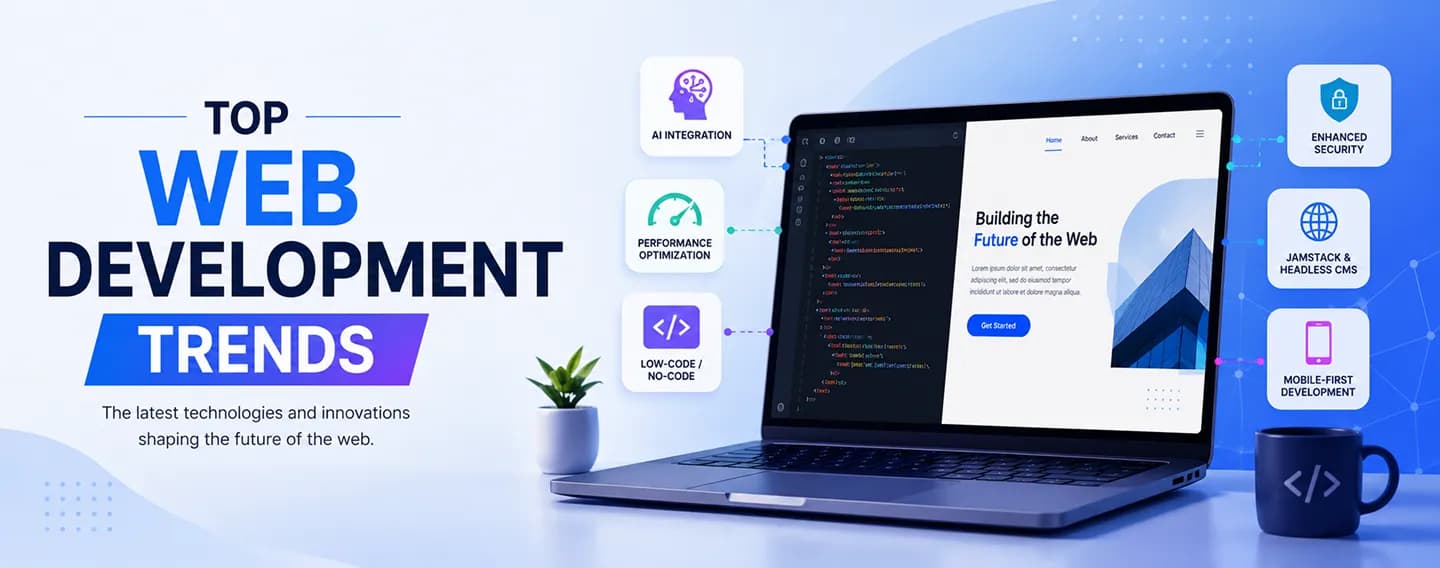
With the majority of users browsing through smartphones, mobile-first development is no longer optional.
Mobile-first design focuses on:
- Responsive layouts
- Faster mobile performance
- Better navigation
- Improved usability
Google's mobile-first indexing makes this trend even more important.
4. Serverless Architecture
Serverless technology allows developers to build and run applications without managing physical servers.
Benefits include:
- Reduced infrastructure costs
- Better scalability
- Faster deployment
- Improved performance
Many modern web applications are adopting serverless solutions for greater flexibility.
5. Voice Search Optimization
Voice search usage continues to grow through smartphones and smart devices.
Businesses are optimizing websites for:
- Conversational keywords
- Question-based content
- Local search queries
Voice search optimization improves accessibility and future-proofs SEO efforts.
6. Enhanced Cybersecurity
As cyber threats increase, website security is becoming a top priority.
Key security measures include:
- SSL certificates
- Multi-factor authentication
- Secure APIs
- Regular security audits
Users expect websites to protect their personal and financial information.
7. API-First Development
Modern websites and applications rely heavily on APIs to connect services and platforms.
API-first development enables:
- Faster integrations
- Better scalability
- Improved flexibility
- Easier maintenance
This approach is especially important for SaaS platforms and enterprise applications.
8. Motion UI and Interactive Design
Users expect more engaging digital experiences.
Motion UI includes:
- Smooth animations
- Interactive elements
- Visual feedback
- Dynamic transitions
When used correctly, these elements improve user engagement without hurting performance.
9. Low-Code and No-Code Development
Low-code and no-code platforms are helping businesses launch websites and applications faster.
Benefits:
- Faster development
- Lower costs
- Easier prototyping
- Reduced technical barriers
While custom development remains important, these platforms are becoming more popular for simple projects.
10. Cloud-Based Web Applications
Cloud technology continues to dominate web development.
Benefits include:
- Better scalability
- Improved reliability
- Global accessibility
- Easier maintenance
Cloud-based applications allow businesses to grow without major infrastructure investments.
11. Performance and Core Web Vitals Optimization
Google continues to prioritize user experience through Core Web Vitals.
Important metrics include:
- Loading speed
- Visual stability
- User interaction responsiveness
Fast and optimized websites rank better and convert more visitors.
12. Headless CMS Architecture
Headless CMS solutions are becoming increasingly popular for modern websites.
Benefits:
- Greater flexibility
- Faster performance
- Omnichannel content delivery
- Better scalability
Businesses looking for advanced content management often prefer headless CMS solutions.
Why Businesses Should Follow These Trends
Keeping up with web development trends helps businesses:
- Improve user experience
- Increase website performance
- Enhance security
- Stay competitive
- Generate more leads and sales
Ignoring modern development practices can lead to slower websites, poor user engagement, and lost business opportunities.
Final Thoughts
Web development in 2026 is focused on speed, security, user experience, and intelligent automation. Technologies like Progressive Web Apps, Artificial Intelligence, cloud computing, and mobile-first design are shaping the future of the web.
Businesses that adopt these trends early can create better digital experiences, improve customer satisfaction, and achieve stronger online growth.
Investing in modern web development is not just about technology—it's about building a stronger digital presence for the future.